
How much does an app cost? Define what the estimate covers
What to prepare so an app estimate covers scope, risk, a security audit before launch and later maintenance.
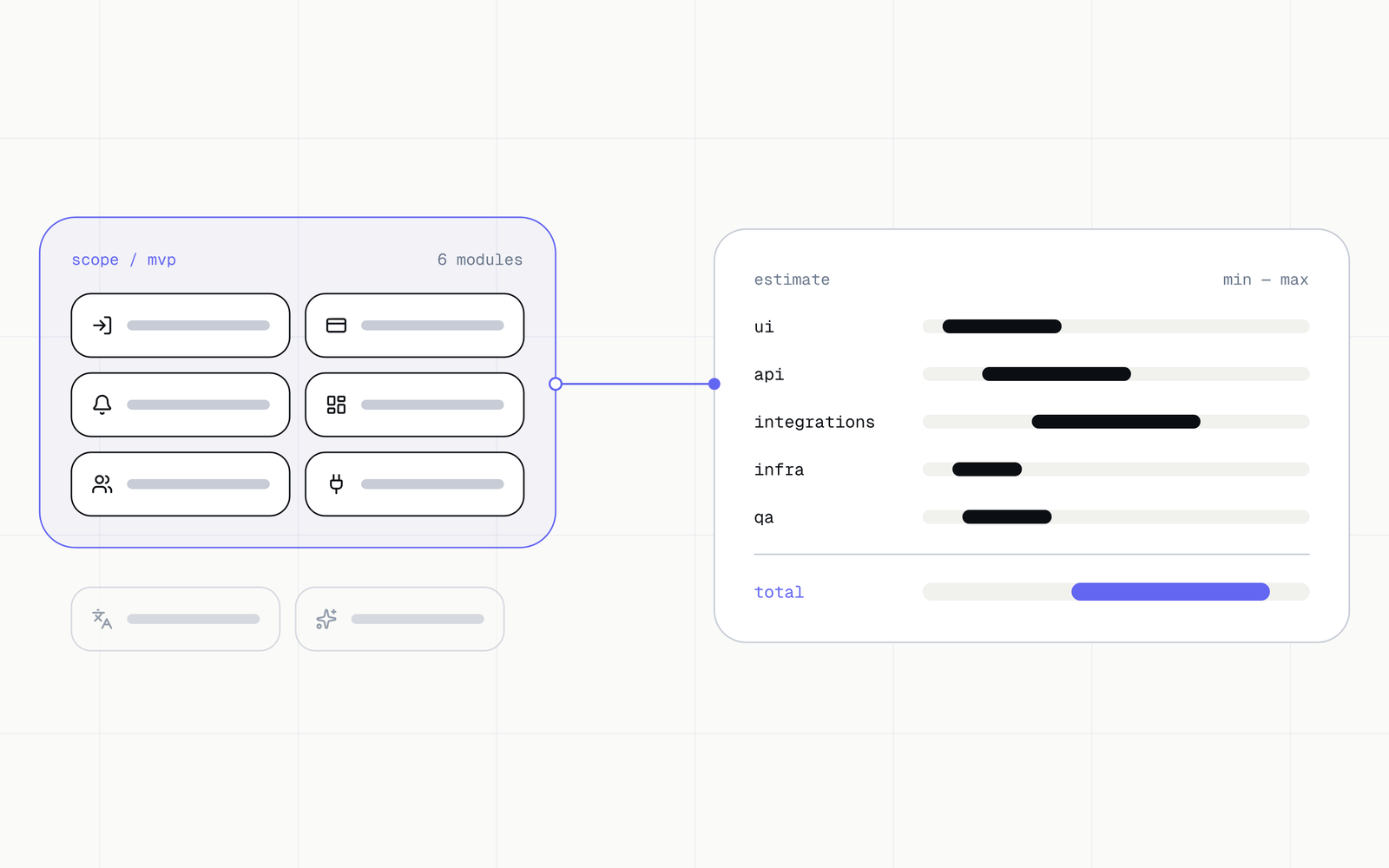
The question about the price of an app usually comes before a description of its scope. Without information about users, features, integrations and the required quality, any specific figure would be false precision. A better first step is to prepare material that lets you compare assumptions and risks. Below we describe what to put in it and which quote items are easy to miss.
Describe the outcome and the list of screens
Start with who will use the product and what task it has to do. Write down the main flows, the user roles, the platforms, and what should happen when there is no network, an error or no permission. Screens help estimate the interface, but they do not show all the logic and states.
Separate the first-version scope from later ideas
Split the features into three groups: necessary to test the main value, important once the direction is confirmed, and optional. For each feature, set an acceptance criterion. The sentence "the user can manage a plan" needs detail: who creates it, who sees it, whether it is shared and what happens after an edit.
Disclose dependencies and constraints
An estimate should account for sign-in and roles, external integrations, data import or migration, privacy requirements, notifications, an admin panel, store publishing and support for different devices. Also give deadlines, budget limits and existing systems, if you know them.
Uncertainty does not disappear when you put it in a spreadsheet. Mark the assumptions, and check the riskiest ones with a prototype or a short discovery stage before you commit to the full scope.
Ask about the total cost
The price of the build is one part of the spending. A good quote shows several items separately, including those that start after release.
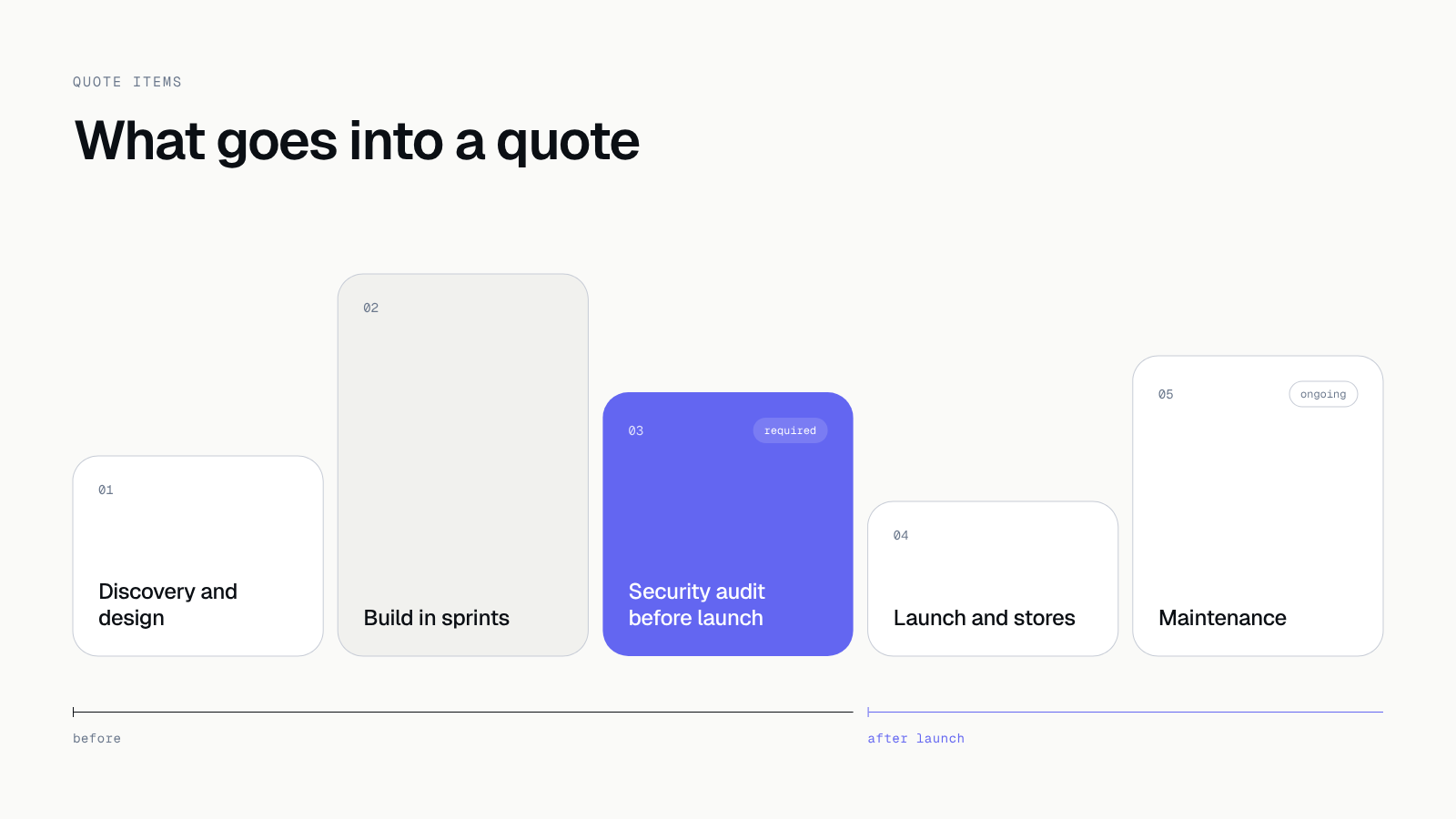 Quote items before and after launch. Block sizes are illustrative.
Security audit before launch
An audit before go-live is a separate quote item. It includes automated scans, manual tests of permissions and sign-in, and a check of backups and access. You get a report describing each finding and how to fix it. The rule is simple: we fix critical and high findings before launch, and a product does not ship with an open critical one. We write more in Application security audit. Ask every contractor whether an audit is in the quote and what exactly it covers.
Maintenance after release
An app does not stop costing on launch day. Include platform and library updates, monitoring, vulnerability patching, support, infrastructure, external tools and work on new features. These costs depend on the chosen services and on how the app is used, so show them as separate assumptions. We explain this in The app works, so why maintain it.
When you compare offers, check that each contains the same items. A quote without an audit and maintenance is simply shorter. You will pay for the missing items later, usually at a worse moment.
What affects the estimate the most
There is no fixed price list, but a few factors change an estimate clearly:
- the number of user roles and permissions,
- the number and quality of integrations with other systems,
- data migration from an old system,
- support for both mobile platforms,
- requirements for sensitive data and GDPR compliance,
- readiness of materials: design, content, access to external services.
Each of these can be described before the call. The better you do it, the fewer assumptions the contractor has to make for you, and the less reserve they have to put into the price.
How to read the quote you receive
When you get several offers, compare them item by item before you look at the total. Ask every contractor the same questions:
- Which assumptions were made, and what happens if one fails?
- What exactly is in scope, and what is excluded?
- Is a security audit before launch in the price, together with a retest after fixes?
- What does maintenance look like and what does it include?
- Who owns the code, the designs and the accounts after the work ends?
- When will I see the first working demo?
With an uncertain scope, a good sign is a proposal for a short discovery stage or a prototype before the full quote. Bad news about costs is better heard at the start than halfway through the project.
How we estimate at Hindbrain
The first call takes about an hour and is free. Then comes onboarding, which takes 1 to 2 weeks. In it we run a discovery workshop, map the processes and risks and write the requirements into a document we approve together. The result is a scope, a schedule and a fixed quote.
After that we work in two-week sprints with a demo at the end and a staging environment that is always available. After every stage you decide whether we continue. Code, designs and accounts are yours from day one, so you do not pay to get your own materials back if you change your mind.
If you are comparing several contractors, the text How to choose a software house will help.
What to send for an estimate call
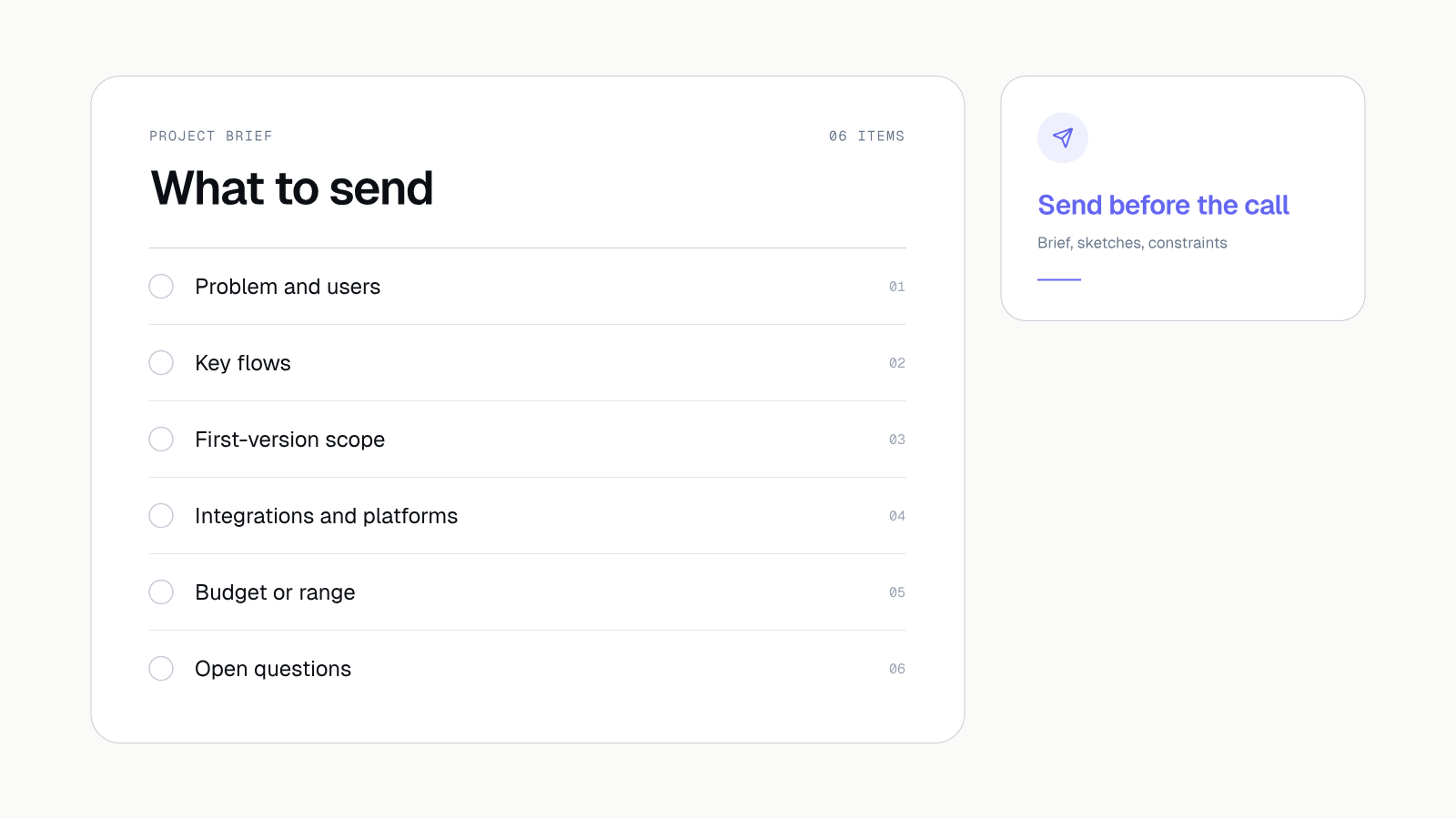 Six points that speed up an estimate.
- A short explanation of the problem and the user groups.
- The most important flows or screen sketches.
- The first-version scope and the success criteria.
- Integrations, platforms and technical constraints you already know.
- The expected deadline, budget or range, if you have that information.
- Open questions and decisions not yet made.
What to do today
Write three things on one page: who will use the app, the one task it should make easier, and three features for the first version. Add whether the app will process personal data. That page is enough to give the estimate call a concrete starting point.
Let's talk about the estimate
Send us such a description or tell us about the idea on a free call. We will come back with a recommendation and a first estimate, and if a smaller scope serves your goal better, we will say so before you spend any money. Tell us about your project.
Takeaway: A credible estimate comes from an explicit scope and explicit assumptions, together with an audit before launch and maintenance. If key information is missing, the next step can be to clarify it together before anyone names a price.